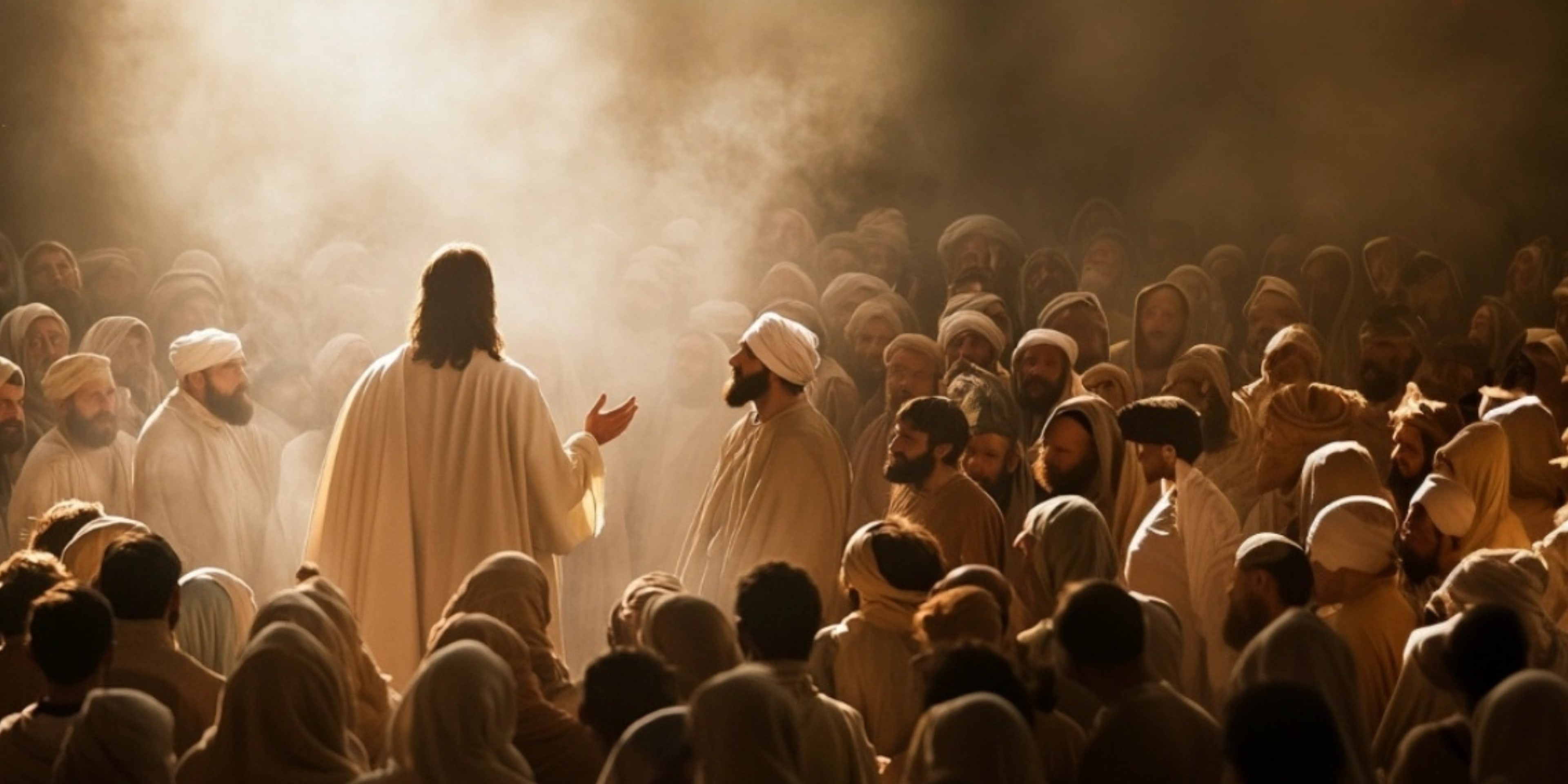
The "I Am" statement in John 15:5 is one of the most beautiful pictures demonstrating a fruitful life marked by love and obedience to Jesus.
"5 I am the vine; you are the branches. The one who remains in me and I in him produces much fruit, because you can do nothing without me."
John 5:15 CSB
This statement holds significance and symbolism that reveals the vital connection between Himself, His followers, and God the Father, emphasizing that a thriving spiritual life depends entirely on remaining in Him.
"I am the true vine, and my Father is the gardener."
John 15:1 CSB
Abiding – John 15:1
This image of the vine wasn't new to His listeners. Throughout the Old Testament, Israel was described as God's vine—a vineyard lovingly planted and tended by the Lord. The psalmist writes, "You dug up a vine from Egypt; you drove out the nations and planted it" (Psalm 80:8). Yet again and again, the vineyard failed to produce the fruit God desired. The prophet's poetic lament in Isaiah 5 echoes this tragedy.
The problem wasn't with the gardener but with the vine itself, which repeatedly turned away from God's ways. Now, standing in the shadow of the temple's golden vine, Jesus declared that He, not Israel, was the true vine. He would succeed where the old vineyard had failed. Staying connected to Israel as a nation-state failed to produce the fruit required. Jesus's disciples would need to remain connected to Him—not just as a source of strength but as their very life.
Abiding in Jesus is about consistently living in His presence, whether our lives are filled with joy or weighed down by struggle. It's about allowing His Word, His love, and His Spirit to shape us daily. Abiding requires time and intention—it's not rushed or sporadic. Jesus invites us to abide in Him because He knows that's where we'll find true life, lasting joy, and the fruit that glorifies God.
"2 Every branch in me that does not produce fruit he removes, and he prunes every branch that produces fruit so that it will produce more fruit. 3 You are already clean because of the word I have spoken to you. 4 Remain in me, and I in you. Just as a branch is unable to produce fruit by itself unless it remains on the vine, neither can you unless you remain in me. 5 I am the vine; you are the branches. The one who remains in me and I in him produces much fruit, because you can do nothing without me. 6 If anyone does not remain in me, he is thrown aside like a branch and he withers. They gather them, throw them into the fire, and they are burned. 7 If you remain in me and my words remain in you, ask whatever you want and it will be done for you. 8 My Father is glorified by this: that you produce much fruit and prove to be my disciples."
John 15:2-8 CSB
God the Gardener, Disciples the Branches – John 15:2-8
For Jesus's audience, the image of the vine would have also brought to mind the meticulous care a gardener provides. These practices of training the vines to grow on trellises, pruning to ensure high quality fruit, and harvesting, illustrate Jesus's teaching about spiritual growth. He said, "Every branch in me that does not produce fruit he removes, and he prunes every branch that produces fruit so that it will produce more fruit" (v. 2). Just as the branches of a vine must be pruned to thrive, so God lovingly removes the distractions and sins in our lives that hinder our spiritual growth.
Pruning is frequently uncomfortable. If you've ever seen a vine after it's been pruned, you know it doesn't look impressive. The lush branches have been cut back, leaving a stark, bare frame. In the same way, when God prunes us through His Word, it can feel like loss, like we're being cut down. Yet pruning is never about punishment—it's about preparation. A gardener prunes with care and purpose, removing what is unnecessary so the plant can thrive. God does the same for us through His Word.
Pruning isn't just about removing the bad; it's about cultivating the good. As God shapes us through His Word, He makes us more fruitful—people who reflect His love, joy, peace, and truth to the world. Let us approach the Word with open hearts, inviting God to do His work in us—this pruning. Like a vine in the hands of a skilled and caring gardener, we can trust that every cut, every correction, and every moment of renewal has a purpose: to help us bear more fruit for His glory.
"9 'As the Father has loved me, I have also loved you. Remain in my love. 10 If you keep my commands you will remain in my love, just as I have kept my Father's commands and remain in his love.
11 "I have told you these things so that my joy may be in you and your joy may be complete.
12 "This is my command: Love one another as I have loved you. 13 No one has greater love than this: to lay down his life for his friends. 14 You are my friends if you do what I command you. 15 I do not call you servants anymore, because a servant doesn't know what his master is doing. I have called you friends, because I have made known to you everything I have heard from my Father. 16 You did not choose me, but I chose you. I appointed you to go and produce fruit and that your fruit should remain, so that whatever you ask the Father in my name, he will give you.
17 "This is what I command you: Love one another."John 15:9-17 CSB
A Vine of Love – John 15:9-17
Jesus begins the final verses of our passage by saying, "As the Father has loved me, I have also loved you. Remain in my love" (v. 9). Jesus is describing a perfect flow of love: from the Father to the Son and from the Son to us. The love that Jesus offers us is not fleeting or conditional. It is steady, sacrificial, and divine—the same love the Father has for Him. He calls us to "remain" in this love. This isn't a passive experience; it requires ongoing obedience and intimacy.
It's important to note that obedience here is not about earning Jesus's love; it's about demonstrating that we are truly abiding in Him. Jesus's love changes us, and that change produces a desire to live in alignment with His commands.
The love Jesus commands is not based on effort or sentiment—it mirrors His great, sacrificial, unconditional love for us (v. 13).
To learn more about the "I Am" statements in John, see "The Gospel of John: I AM Statements" Bible Study.
See all of the "I Am" content below:
"I Am the Bread of Life": What Jesus Meant and Why It Matters
"I Am the Light of the World": What Jesus Meant and Why It Matters
"I Am the Good Shepherd": What Jesus Meant and Why It Matters
"I Am the Resurrection and the Life": What Jesus Meant and Why It Matters
"I Am the Way, the Truth, and the Life": What Jesus Meant and Why It Matters