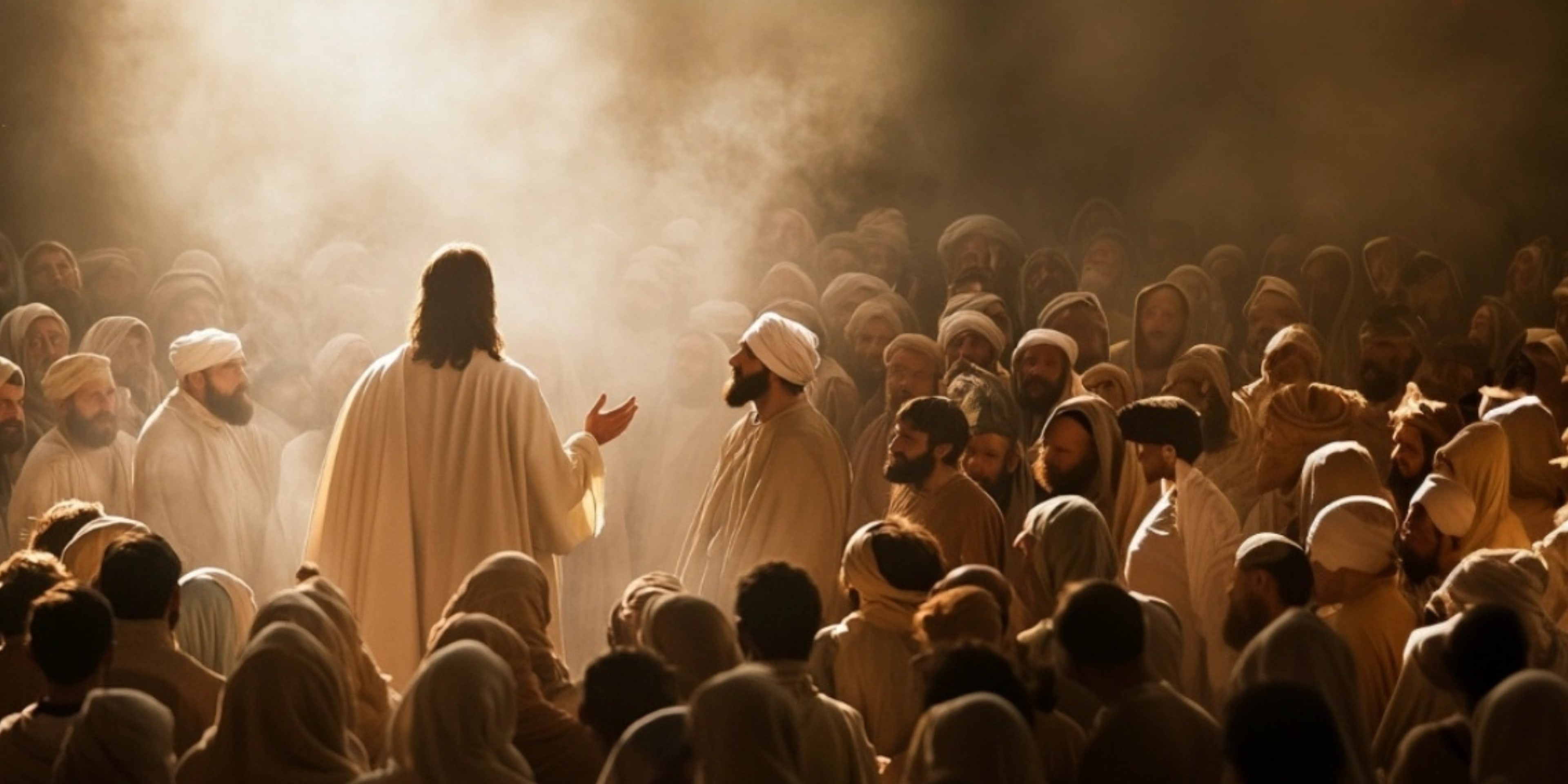
John 11:25 includes one of the most life changing "I Am" statements made by Jesus:
"25 Jesus said to her, 'I am the resurrection and the life. The one who believes in me, even if he dies, will live. 26 Everyone who lives and believes in me will never die. Do you believe this?'"
John 11:25-26 CSB
This statement holds significance and symbolism that reveals key truths about who Jesus is, and how He is worthy of our praise and trust. Because Jesus is the Resurrection and the Life, when we believe in Him and have a relationship with Him, we can have an eternal hope and victory over death.
"11 Now a man was sick—Lazarus from Bethany, the village of Mary and her sister Martha. 2 Mary was the one who anointed the Lord with perfume and wiped his feet with her hair, and it was her brother Lazarus who was sick. 3 So the sisters sent a message to him: "Lord, the one you love is sick."
4 When Jesus heard it, he said, "This sickness will not end in death but is for the glory of God, so that the Son of God may be glorified through it." 5 Now Jesus loved Martha, her sister, and Lazarus. 6 So when he heard that he was sick, he stayed two more days in the place where he was. 7 Then after that, he said to the disciples, "Let's go to Judea again."
8 "Rabbi," the disciples told him, "just now the Jews tried to stone you, and you're going there again?"
9 "Aren't there twelve hours in a day?" Jesus answered. "If anyone walks during the day, he doesn't stumble, because he sees the light of this world. 10 But if anyone walks during the night, he does stumble, because the light is not in him."
11 He said this, and then he told them, "Our friend Lazarus has fallen asleep, but I'm on my way to wake him up."
12 Then the disciples said to him, "Lord, if he has fallen asleep, he will get well."
13 Jesus, however, was speaking about his death, but they thought he was speaking about natural sleep. 14 So Jesus then told them plainly, "Lazarus has died. 15 I'm glad for you that I wasn't there so that you may believe. But let's go to him."
16 Then Thomas (called "Twin") said to his fellow disciples, "Let's go too so that we may die with him.'"John 11:1-16 CSB
The Prelude – John 11:1-16
The story in John 11 begins with a family in crisis: Mary, Martha, and their brother Lazarus, who is gravely ill. Mary and Martha send a message to Jesus, saying, "Lord, the one you love is sick" (John 11:3). Instead of rushing to Bethany, Jesus stays where He is for two more days. This delay can seem perplexing, but it underscores that Jesus operates on a divine timetable and according to divine purposes—beyond what humans can grasp.
After two days, Jesus announces to His disciples, "Let's go to Judea again" (v. 7). Jesus then tells His disciples plainly, "Our friend Lazarus has fallen asleep, but I'm on my way to wake him up" (v. 11). The disciples misunderstand this statement, thinking Jesus is referring to natural sleep, which would aid Lazarus's recovery. To clarify, Jesus states bluntly, "Lazarus has died. I'm glad for you that I wasn't there so that you may believe. But let's go to him" (vv. 14-15). This moment highlights Jesus's omniscience and His purposeful approach to Lazarus's death. Jesus allows this event to unfold in such a way that it will strengthen the disciples' faith. By waiting until Lazarus has died, Jesus ensures that the miracle He will perform will leave no doubt about His divine power and identity as the Son of God. It is clear from this account that the Lord is more interested in our faith in Him than He is our preferred comfort and conveniences in this life.
"26 Everyone who lives and believes in me will never die. Do you believe this?"
27 "Yes, Lord," she told him, "I believe you are the Messiah, the Son of God, who comes into the world.'"John 11:26-27 CSB
The Resurrection and the Life – John 11:27-26
John 11:17-27 is a deeply moving passage that invites us to contemplate the tension between human grief and divine hope. Here, we find a roadmap for understanding how God meets us in our suffering and offers us a greater hope. There is no way to truly grasp and live the truths of this passage without also experiencing the pains it relieves us from. If Jesus is the Resurrection and the Life, then to know it, we must experience something of death.
By the time Jesus arrives, Lazarus has been in the tomb for four days. In Jewish culture, by the fourth day, all hope of life was considered gone. Lazarus is, in every sense of the word, dead. Martha and Mary are surrounded by mourners, showing the depth of their loss and the love Lazarus inspired in his community.
Martha's words in verses 21-22 are a mixture of faith and lament. A mixture of lament and trust is often mistaken as weak faith, but in reality, it is a mature faith. Bringing our questions and emotions to God is not a sign of weakness but an act of trust.
"21 Then Martha said to Jesus, 'Lord, if you had been here, my brother wouldn't have died. 22 Yet even now I know that whatever you ask from God, God will give you.'"
John 11:21-22 CSB
Jesus offers Martha a promise in response to her sadness and trust: "Your brother will rise again" (v. 23). Martha interprets this in the traditional Jewish understanding of resurrection—a future event when all the righteous will be raised at the end of time. While her response reflects orthodox belief, it also reveals a subtle limitation in her understanding regarding Jesus's identity and purpose. Martha sees the resurrection as a distant event, something abstract and far-off. But Jesus is about to reframe her perspective, shifting it from a distant hope to a present reality.
"25 Jesus said to her, 'I am the resurrection and the life. The one who believes in me, even if he dies, will live. 26 Everyone who lives and believes in me will never die. Do you believe this?'"
John 11:25-26 CSB
Jesus's declaration that He is "the resurrection and the life" is not just a promise about what Jesus can do—it is a statement about who He is. Resurrection and life are not merely future events; they are embodied in the person of Jesus. Jesus holds the power to defeat death. For those who believe in Him, death is not the end but a doorway to eternal life. Jesus offers abundant, eternal life that begins now. Life in Jesus is not limited by physical death; it is a relationship with God that transcends it.
Remarkably, Jesus invites Martha—and us—to trust in Him, not only for the future but also for the present. The question, "Do you believe this?" is critical. Jesus is not asking if Martha believes that He is about to raise her brother from the dead. Rather, He wants to know if her faith can go beyond a distant, theological truth about the last resurrection toward a personal trust in Jesus as the only one who can grant eternal life. The question calls us to place our faith in Jesus, trusting that He is who He says He is and that He has the power to transform our lives.
Martha's response in verse 27 is a powerful confession of faith that must be replicated. She acknowledges Jesus as the Messiah (the Christ) and the Son of God. Her statement reflects a deep trust in Jesus's identity, even in the midst of her grief. It's a significant moment for her and for us because it shows that faith is not about having all the answers or being free from sorrow. It is about recognizing who Jesus is and trusting Him in the middle of life's pain and uncertainties. Martha's confession also reminds us that faith is not just an intellectual assent—it is a personal relationship with Jesus. It is trusting Him as the Christ, the Son of God. May we, like Martha, bring our honest questions to Jesus and confess with faith, "Yes, Lord. I believe you are the Messiah, the Son of God, who comes into the world." In Jesus and Jesus alone we find life—both now and forever.
To learn more about the "I Am" statements in John, see "The Gospel of John: I AM Statements" Bible Study.
See all of the "I Am" content below:
"I Am the Bread of Life": What Jesus Meant and Why It Matters
"I Am the Light of the World": What Jesus Meant and Why It Matters
"I Am the Good Shepherd": What Jesus Meant and Why It Matters
"I Am the Resurrection and the Life": What Jesus Meant and Why It Matters
"I Am the Way, the Truth, and the Life": What Jesus Meant and Why It Matters