When it comes to defining what the church is, there is a lot of confusion. Multiple usages abound, and there is a lack of clarity at a most basic level—understanding the very essence and nature of the church. We need to do some solid biblical thinking.
The church was born on the Day of Pentecost (Acts 2), and we recognize from Ephesians 3:14–21 the church of the Lord Jesus Christ is made up of all believers of all ages. Revelation 5 and 7 celebrate this glorious eschatological reality.
A survey of the New Testament reveals four clear uses of the term church. It is helpful to quickly identify each:
1. The Local Church
Most often the Greek word ekklesia designates a specific gathering of believers in some definite locality. This is its primary usage in the Bible. The church is the people of God not a building.
2. A House Church
Many local churches met in houses, and so they were called “house churches” (Philem. 2).
3. A Collection of Churches
The churches of a region, for example Judea, Galilee, and Samaria (Acts 9:31). This use is very rare.
4. The Universal Church
In some instances, the word serves to denote the whole body of Christ, all believers throughout the world, those who outwardly profess Christ and organize for purposes of worship, under the guidance of appointed officers called "elders" or "pastors." This is an emphasis found in the books of Ephesians and Colossians, and also the pastoral epistles of 1 and 2 Timothy and Titus.
What the Church is Not
Just as it’s important to remember that “church” can mean several different things, it’s also important to remember what church is not.
1. Not a Building
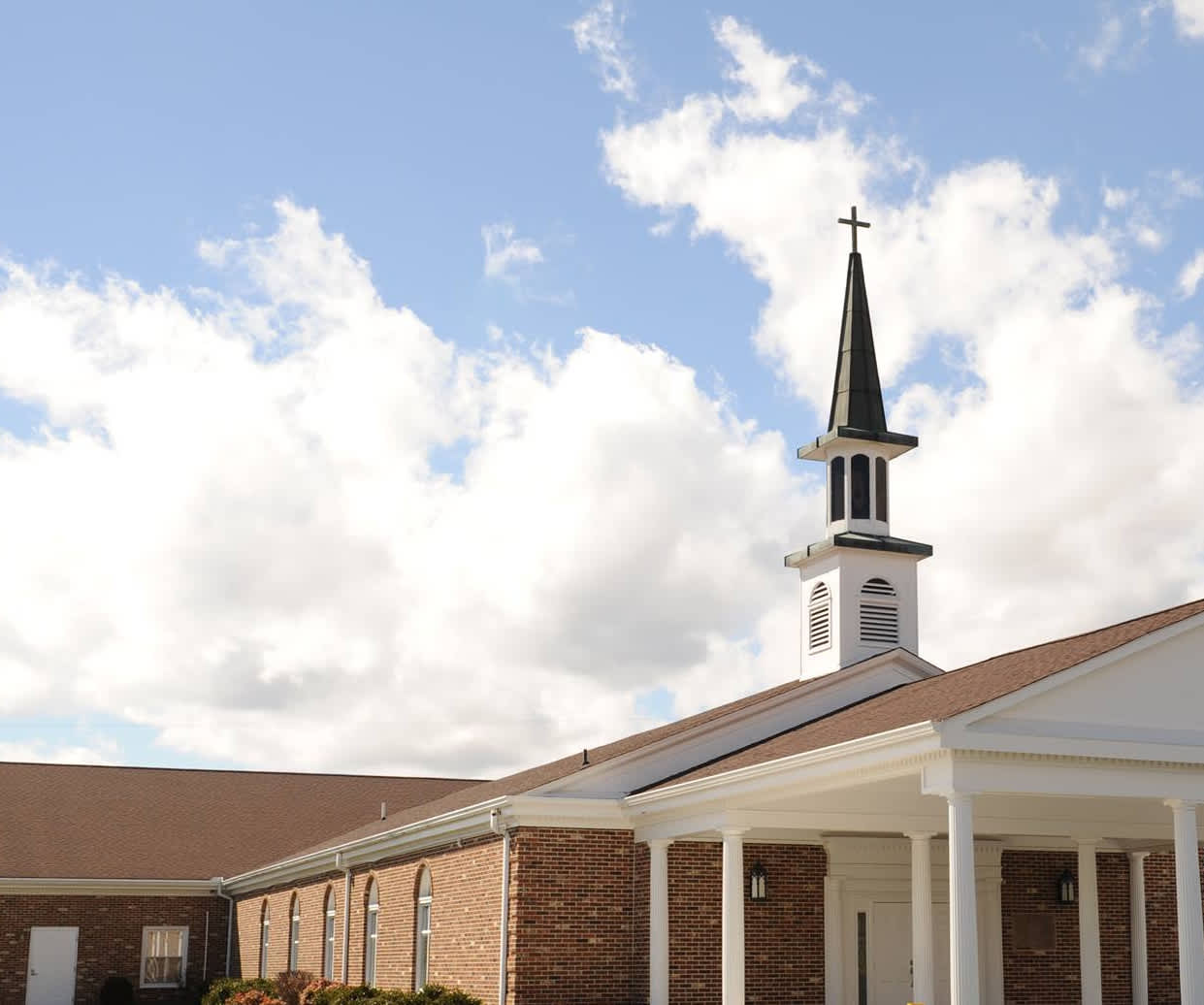
Nowhere in the New Testament does the word ekklesia mean a building. The ekklesia of the New Testament is never a structure composed of bricks and mortar. A statement such as “I pass by the church every day on my way to school” would make no sense to early Christians. The church is the body of believers in Jesus wherever they gather for worship, witness, and work. In the early days, gatherings were small, and believers, as previously mentioned, often met in homes (Rom. 16:5; Col. 4:15; Philem. 2).
2. Not a Denomination
The church is not a national organization or a denomination. However, needs can be met by denominations. There is no reason why individual churches should remain isolated, without real, visible union with other churches. Biblical images and metaphors, such as the people of God, the body of Christ, and temple of the Holy Spirit, are one of the means whereby we learn about the essence and nature of the church. Our colleague John Hammett believes “this is the primary means by which we are instructed.” In addition to the three images, Mark Dever adds, “The church is the herald of the gospel (as in Acts).
The church is the obedient servant (drawing from Isaiah). The church is the bride of Christ (as in Revelation 19 and 21). The church is a building [“spiritual house,” not a literal structure] (1 Pet. 2:5; Eph. 2:21). . . . The church is the community of people who live in the last days inaugurated by Christ’s earthly ministry and the coming of the Spirit.”1
From this definition, let’s make some observations about important aspects of church life and practice.
How Can You Find a “Real” Church?
If you’ve ever moved to a new city, you have probably had to look for a new church. If you live in the United States, chances are you had many options, especially if you live in a part of the country with a strong evangelical presence, like the South or the Midwest. Regardless, when you visit a new church, how do you decide which church to attend? If you are like me, you want to find a church that reflects what God described in his Word as a healthy church.
Here are some good questions to ask:
What are “the marks” of a New Testament church?
What are the marks of a healthy church?
These two questions are clearly interrelated. What are the essential and nonnegotiable evidences of a New Testament church?2
Throughout church history, brilliant thinkers have tried to answer these questions, so that people like you and me might have churches around thousands of years into the future—so that God’s mission might continue on earth.
Theologians have debated the “marks,” or attributes, of a true church for centuries. For example, the Council of Constantinople in AD 381 stated that as Christians “we believe in one, holy, catholic and apostolic church.”
Four adjectives contained in this statement deserve a brief explanation since at least one term (“catholic”) is subject to misunderstanding:
One
The church is one just as God is one. The church as the body of the one Lord Jesus Christ is to be known for its oneness or unity. Christians should be characterized by their unity (Acts 4:32). The unity of believers is to be evident in the church and as a witness to the world. Divisions and disputes bring shame and harm our testimony.
Holy
The church is to be holy because God is holy (Lev. 11:44–45; 19:2; 20:7; 1 Pet. 1:14–16). As the dwelling place of the Holy Spirit, the church is made up of saints set apart for God (1 Cor. 1:2). Our holiness is at the most basic level Christ’s holiness. His holiness should be reflected in the church’s holiness (Rom. 6:14; Phil. 3:8–9).
Paul teaches, that “Christ loved the church and gave Himself for her to make her holy, cleansing her with the washing of water by the word. He did this to present the church to Himself in splendor, without spot or wrinkle or anything like that, but holy and blameless” (Eph. 5:25–27). In this present age, the church will never attain a perfect experiential holiness, rather, God transforms and grows church members to be increasingly conformed into the image of Christ over their lifetime by the power of the Holy Spirit (Rom 8:29; Col 3:10).
As 2 Corinthians 3:18 puts it, as each of us beholds the image and “glory of the Lord,” we “are being transformed into the same image from glory to glory; this is from the Lord who is the Spirit.” We aren’t fully transformed yet; we “are being” transformed degree by degree. This lifelong transformation will eventually come to full fruition the other side of death when we enter heaven’s glory. Regarding this process for the church, the Reformer John Calvin put it well: “The Lord is daily smoothing its wrinkles, and wiping away its spots. Hence it follows that its holiness is not yet perfect. Such, then, is the holiness of the church: it makes daily progress, but is not yet perfect; it daily advance, but as yet has not reached the goal…”3
Catholic or Universal
When the Council of Constantinople described the church as “catholic,” it was not speaking of a certain tradition or denomination in the way modern people speak of “catholic.” Rather, in its historical context, this word means “universal.” To say the church is universal simply means it spans across space and time. It constitutes all believers of all the ages and reflects the nature of the true church.
While every true local church is part of this universal church and is a church in and of itself, no local church can be said to constitute the universal church. However, the church in both its local and universal manifestations is the body of Christ and is to reflect Christ and honor Christ.
Apostolic
The church is apostolic because it is founded on the Scriptures given through the apostles. The gospel and “the faith that was delivered to the saints once for all” (Jude 3) has been passed down from the apostles who were called to be with Jesus. Paul told the church at Ephesus that they had been “built on the foundation of the apostles and prophets, with Christ Jesus Himself as the cornerstone” (Eph. 2:20).
John Calvin, also is well known for his saying, “Wherever we see the word of God sincerely preached and heard, wherever we see the sacraments administered according to the institution of Christ, there we cannot have any doubt that the church of God has some existence…”4 Anabaptists and Baptists went further than the Reformers, insisting upon “a believer’s church.” The conclusion they reached was inescapable: the church must be composed of genuine believer members only.
This biblical basis for a believers-only, or “regenerate church,” is so clear that it is difficult to understand how we ever lost it. It is also hard to understand why we minimize it today within many of our own churches.5