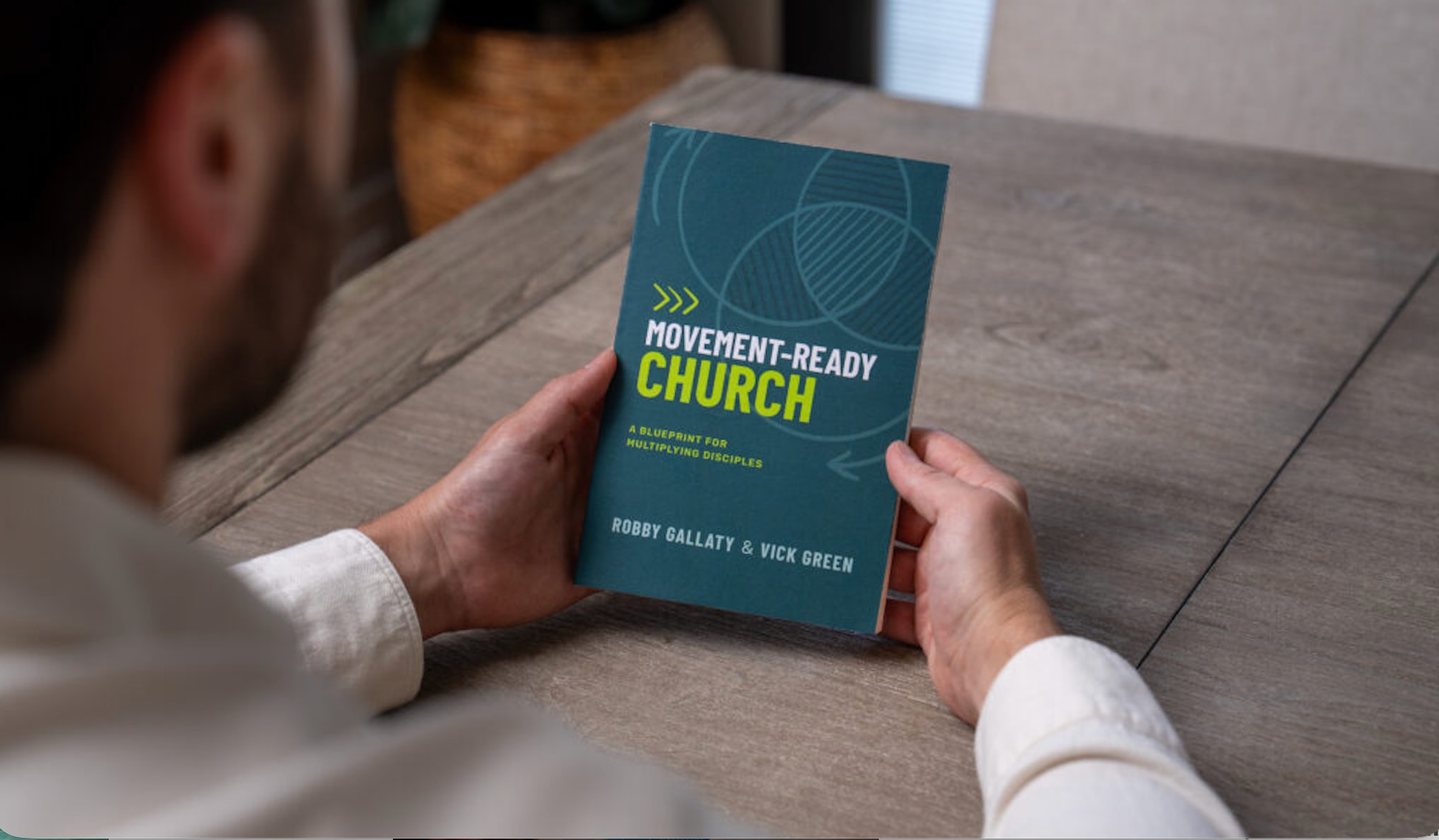
Excerpted with permission from Movement-Ready Church by Robby Gallaty and Vick Green. Copyright 2026, B&H Publishing.
While every church movement shares essential elements, their expressions are different. The early church’s movement was unique. Your movement will be unique. You may have a congregation of 100 or 1,000. Your church may be more rural or more urban. You may be Presbyterian, Methodist, Baptist, or Nondenominational. The goal isn’t to make you like any other church.. The goal is to help you be who God calls your church to be.
1. Spiritual Renewal
What starts and sustains your movement
You surely know the quote, “Hope is not a strategy.” As a leader and strategist, I appreciate this sentiment, but as a pastor, I believe an even more important principle is this: “Strategy can never be our greatest hope.”
Often, church leaders gravitate toward planning more than praying. But it’s not an either/or. The strategic and spiritual elements of pastoral leadership are friends, not enemies. God has called us to plan and to strategize, yes, but the spiritual aspect must come first. That’s why the first and most essential element in a church’s mission of disciple-making is spiritual renewal.
This is all about what is happening in the hearts of the church’s leadership. It connects their intimacy with Jesus with their ministry activity. You can think about it this way: Before we look for others to change, we must first look at what needs to change in us. There must be what we call a “desperation in me.”
To activate your disciple-making movement, you must get to the end of yourself, where you’re not relying on your own charisma, the newest program, a bigger conference, or a silver-bullet strategy. Spiritual renewal is all about the leadership team fostering an insatiable hunger for more of God, both for themselves and for their people. As they desperately pursue God, a ripple effect will spread through the church.
In his popular book Leading Change, John Kotter provides the eight steps you must take to lead change in your organization. The first step is to create urgency.1 Until your people see a problem with today and become desperate for a better future, they will never move. The same is true with your church. Until the leadership’s hunger for more of God is greater than its desire for more of the same, a movement can never be started.
Or sustained.
Spiritual renewal is not only what’s required to start a movement but to sustain it. Everyone wants to see a disciple-making movement started. The question is, do you have the grit to lead one? And to keep leading one? When times get tough, when your people aren’t excited anymore, when new opportunities come up, will you stay committed? Spiritual renewal is what helps you stay devoted to what God has called you and your church to do.
"Without spiritual renewal fueling your church’s leadership, you will burn out."
Robby Gallaty and Vick Green
As the great philosopher Mike Tyson once said, “Everyone has a plan until they get hit in the mouth.” You can create the greatest vision and strategy, but if there isn’t a desperation for more of God in your leadership, the first bump in the road will derail your movement. You’ll burn out.
Look at Jesus’s life. How discouraged he must have been when the masses left his movement after hearing a hard teaching. Or how annoyed when the Pharisees knew the law but wouldn’t live it. How angry he must have been when the temple had become a den for robbers. Or how hurt when Peter betrayed him. How disappointed he must have been when the disciples were sleeping instead of praying in the garden. Or how anxious when he was pleading for the cup to be taken from him.
The feelings of a pastor leading his church are much like the ones Jesus felt. We experience great highs but also many deep lows, marked with discouragement, disappointment, fear, hurt, anger, and more.
The mission that was given to Jesus and to us is far too great to try doing it separate from him. If Jesus had not had a deep and consistent intimacy with his Father, he would never have had the strength to overcome the setbacks and hardships of the mission. Similarly, you and your leadership will never be able to lead a disciple-making movement without an intimate connection to the Holy Spirit who sustains you all along the way.
2. Disciple-Making Culture
What shapes your movement
The second thing your church must have is a disciple-making culture. We’ve said it before, but it bears repeating. While spiritual renewal can bring a move of God, it requires disciple-making to become a movement of God. Seeking God and desiring more of him will always guide your leadership to return to what he’s called the church to do from the beginning: to go and make disciples. If spiritual renewal is all about “desperation in me,” disciple-making culture is all about “dedication to the few”—to the life-on-life nature of discipleship that Jesus modeled for us.
For many, this idea of focusing on the few is a dramatic shift in their church’s philosophy and leadership mentality. But to lead our churches well, we must be committed not only to the words of Jesus but to the ways of Jesus, or else something will always be missing. It isn’t enough just to grow a church; we must ensure that its growth lines up with the heart of God and the ways that Jesus has modeled for us. If we want to see the blessings of Jesus’s ministry, we can’t separate ourselves from the method Jesus gave us.
Again, looking at Jesus’s life, we see his leadership focused on investing in the few before he impacted the many. He spent the majority of his ministry with twelve men. Christianity is still alive today not because he gave most of his time to the crowds but because of twelve men who went out and followed his example.
We, too, must give the best of our time to disciple the faithful men and women that God has placed here for us to invest in. As we focus on the depth of our church, God will undoubtedly expand the breadth of our church.
"Having a disciple-making culture, dedicated to the few, is what shapes your movement."
Robby Gallaty and Vick Green
Not all church growth equals kingdom growth. Just because people are attending your church or participating in your programs doesn’t guarantee it’s the type of growth that God has called you to steward. Your disciple-making culture assures you that the growth you see is healthy growth, not superficial growth.
When Jesus measures the health of the church, he doesn’t count the people in it, he weighs them—meaning, the depth of your disciple is more important than the breadth of your ministry. We must always make sure the growth we’re experiencing is not just the result of making converts or program attenders. Instead, it’s the kind of growth that comes from making disciples who can make other disciples.
"Without disciple-making culture in your church, you will program out."
Robby Gallaty and Vick Green
I consistently talk to pastors who hit this wall. They sometimes spend decades of their ministry searching for the next sure-fire program that’ll jump-start growth in their church until they finally grow exhausted from running the never-ending treadmill of program management. A moment finally happens when they look in the mirror and say, “Something’s missing. This isn’t why I got into ministry.”
Don’t hear what I am not saying. Events and programs are good. At our church we offer a lot of events and programs. They serve a vital function of drawing people into the family of God. They aren’t bad, but they are incomplete. We must move beyond programs to ensure that life-on-life disciple-making is happening in and through our people.
3. Organizational Clarity
What spreads your movement
Lastly, your church must have organizational clarity. We’ve talked about having “desperation in me” and “dedication to the few.” Organizational clarity is all about your “declaration for the many.” As your church grows, you must create the words that capture your heart as a leader and communicate it in a way that resonates with your people. You must communicate the WHY, HOW, and WHERE of your movement clearly enough to help people catch the vision you have for your church.
In most of the leadership teams I work with, there’s a visionary in the room who has great dreams and plans. But there’s often frustration in the room as well, because this vision isn’t shared by everyone else—not even by the staff, much less the congregation. “Creating a vision for your church is easy. Creating a shared vision is hard.”2
Organizational clarity is what spreads your movement. Once you grow beyond the first thirty people in your church, clarity becomes crucial. When the group is small, the people who directly spend time with the leader catch the vision merely by proximity. Through dialogue and living in community with one another, the church can capture the spirit of the vision and join in. But as the church grows, the gap widens between the vision the leader has and the vision the church catches.
Charles Swindoll once said, “A mist in the pulpit will invariably cause a fog in the pew.”3 Every preacher resonates with this concept. They realize if they don’t communicate a message on Sunday morning with 100 percent clarity, their people won’t understand it. The same is true for leading your church every other day of the week. Your church’s vision is a leader’s greatest sermon. If your vision is misty among your leadership team, you can be sure it’s a total fog to your people.
Leaders must create organizational clarity to close that gap. Finding the right words that don’t just resonate deeply in the leader but give clarity and direction for the staff and congregation is crucial. If there isn’t clarity by everyone in the church on these things, everyone is left feeling confused and frustrated. And the church feels stuck.
"Without organizational clarity within your church, you will stall out."
Robby Gallaty and Vick Green
As the attendance and complexity of your church increases, you must regularly keep evaluating your message, because the level of clarity you needed for getting where you are today won’t be what you need for getting where you want to be in the future.
So, what activates a movement?
1. Spiritual Renewal
2. Disciple-Making Culture
3. Organizational Clarity
This simple three-part Movement-Ready Church tool can be both an assessment and a guide for your church to help you get moving. If you feel stuck, consider which of the overlapping phrases best describe you and your church. Do you feel burnt out, programmed out, or stalled out? This will help you identify which of the three essential elements you most likely need to strengthen to see movement in your church.