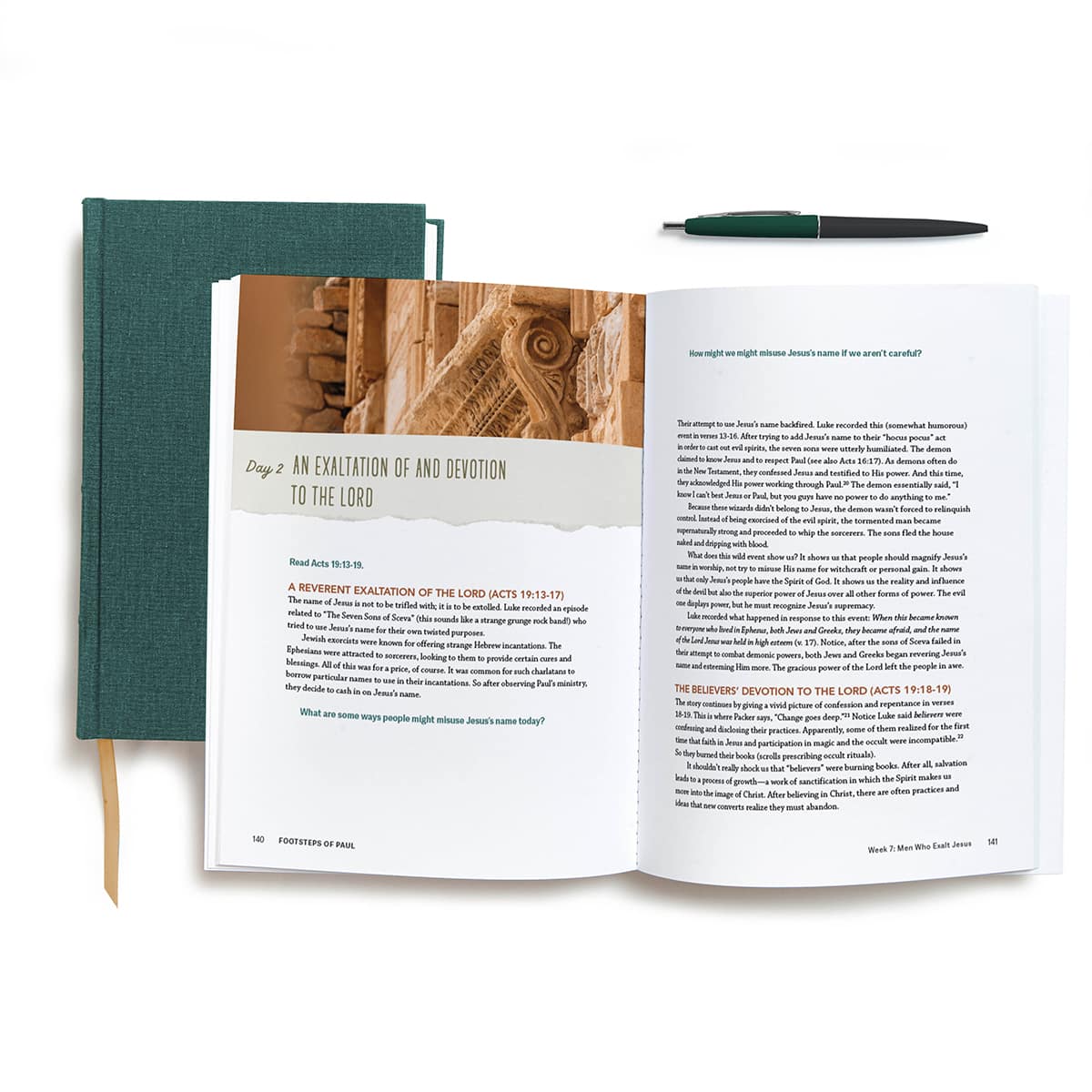
Excerpted with permission from the Footsteps of Paul Bible Study, session one by Tony Merida. Copyright 2026, Lifeway Press.
In 1909, J. Campbell White, an advocate for missions and the secretary of the Laymen's Missionary Movement, gave a strong word to men:
"Most men are not satisfied with the permanent output of their lives. Nothing can wholly satisfy the life of Christ within his followers except the adoption of Christ's purpose toward the world he came to redeem. Fame, pleasure and riches are but husks and ashes in contrast with the boundless and abiding joy of working with God for the fulfillment of his eternal plans. The men who are putting everything into Christ's undertaking are getting out of life its sweetest and most priceless rewards."
J. Campbell White
In Paul's missionary journeys, we witness men who boldly put everything into Christ's cause and saw remarkable things as a result. This is a great challenge to us—a much needed challenge!
Paul and his brothers sailed across the Aegean Sea and arrived in Philippi. Upon arrival, they encountered all sorts of obstacles but also saw Jesus display His power in that city. He transformed the lives of diverse individuals, including Lydia, as we read in the previous passage. Eventually, Jesus established His church in this city.
This remarkable story in Acts 16 should give us confidence to be bold in our witness today. Jesus is still changing lives. And we get to be part of this work.
In fact, one interesting feature of the book of Acts is that it ends rather abruptly (Acts 28:31). It's like Luke is saying, "This book is over, but the mission isn't." That's where we come in. The church continues the mission of the book of Acts. When we read this book, we read about our spiritual history. The men and women in Acts are our brothers and sisters in Christ. So the "footsteps of Paul" aren't something we want to study as detached, casually interested historians. We must read as those who are continuing this story, taking our place in history.
The brothers were led to Philippi, and the first convert in Europe, Lydia, came to faith through a simple exposition of Scripture. But the next lady couldn't have been more different! Luke highlighted the missionaries' encounter with a young, tormented girl. Luke says,
"Once, as we were on our way to prayer, a slave girl met us who had a spirit by which she predicted the future. She made a large profit for her owners by fortune-telling."
Acts 16:16 CSB
The phrase spirit of divination literally means "spirit of python." According to mythology, Python was a serpent that guarded the temple of Apollo. Later, the word python came to mean a demon-possessed person through whom Python spoke. Luke and Paul clearly understood her to be demon-possessed. The "pythoness" made clairvoyant predictions and uttered words in all sorts of strange voices. Because the locals considered these fortune-tellers to be inspired by Apollo and Python, many sought them to make predictions about their future. Luke said there was great profit in this business.
This poor girl was in double-bondage—to her slave-owners, who treated her like property, and to this demonic spirit. Luke says,
"As she followed Paul and us she cried out, 'These men, who are proclaiming to you[a] a way of salvation, are the servants of the Most High God.'"
Acts 16:17 CSB
Satan tried to associate Paul's message with the occult. For many days, this slave girl uttered things that were entirely true, but the missionaries did not fall prey to the evil scheme. In the Gospels, demon-possessed people said true things about Jesus, but Jesus rebuked them every time (Luke 4:34-35; Mark 1:24-25; 5:7-8).