You’ve never met a book like the Bible. It’s unlike any other piece of literature. It was written over a period of 1,600 years by over forty different authors from wildly different backgrounds (kings to commoners, scholars to shepherds), in wildly different places (deserts and cities, prisons and palaces), under wildly diverse circumstances (through war and peace, in freedom and exile). Yet with all that variety, this book addresses the most complex topics in the world with flawless unity and consistency! This is one of many reasons we conclude that behind the human authors there is one primary Author: God Himself.
How is the Bible put together?
The Bible truly is a library. Each of its sixty-six smaller books can stand alone as unique works of literature. But unlike our libraries today, the Bible isn’t full of books that have little or no connection. It’s a highly curated library in which every book partners together to tell one grand story. Understanding the grand story (sometimes called the metanarrative) of Scripture will help us make sense of every book we pull off the shelf. One of the easiest ways to see that overarching story is to look at its bookends. When we look at the beginning and end of the Bible, we quickly see that this is no ordinary library of books. From beginning to end, God’s Word is taking us on a beautiful, poetic, breathtaking journey.
What are the Old and New Testament?
The largest division in the library of the Bible is between the two testaments. If you’ve always been confused by the word “testament,” fret no more! Testament is simply another word for covenant. Really helpful, Jimmy. What’s a covenant? Fair question!
Let me define that too: A covenant is a formal agreement or promise made between two parties. (I can’t help you if you don’t know what agreement or promise means.) So, the first thirty-nine books of the Bible contain the old covenant. The last twenty-seven books contain the new covenant. When we discover how these two covenants (or testaments) are connected, we begin to understand the Bible in a much deeper way.
From the last book of the Old Testament to the first book of the New, there’s a gap of about 400 years (often called “the years of silence”). What draws these years to a close? A birth. In fact, the birth. The birth of Jesus is the hinge that connects both testaments together. The Old Testament presents problems only Jesus can solve and then prophesies about the ways He will solve them. It constantly looks ahead to what’s coming in His birth, life, death, and resurrection. Meanwhile, the New Testament looks backward to what Jesus did. It reflects on and explains all that Jesus accomplished.
Is the Bible in chronological order?
No, the books of the Bible are not in chronological order. If that’s news to you, surprise! Keeping in mind that the Bible is like a library is helpful as we think about how Scripture is organized. Like a library, the books of the Bible are grouped by type, not by date. For example, the book of Job, which is likely one of the oldest books in the Bible, shows up halfway through the Old Testament. It sits with Psalms and Proverbs because they are all wisdom books. In the New Testament, the book of James is considered to be one of the first letters written, yet it sits in the back of the Bible. Meanwhile, all thirteen of Paul’s letters sit together toward the front, even though many were written after James.
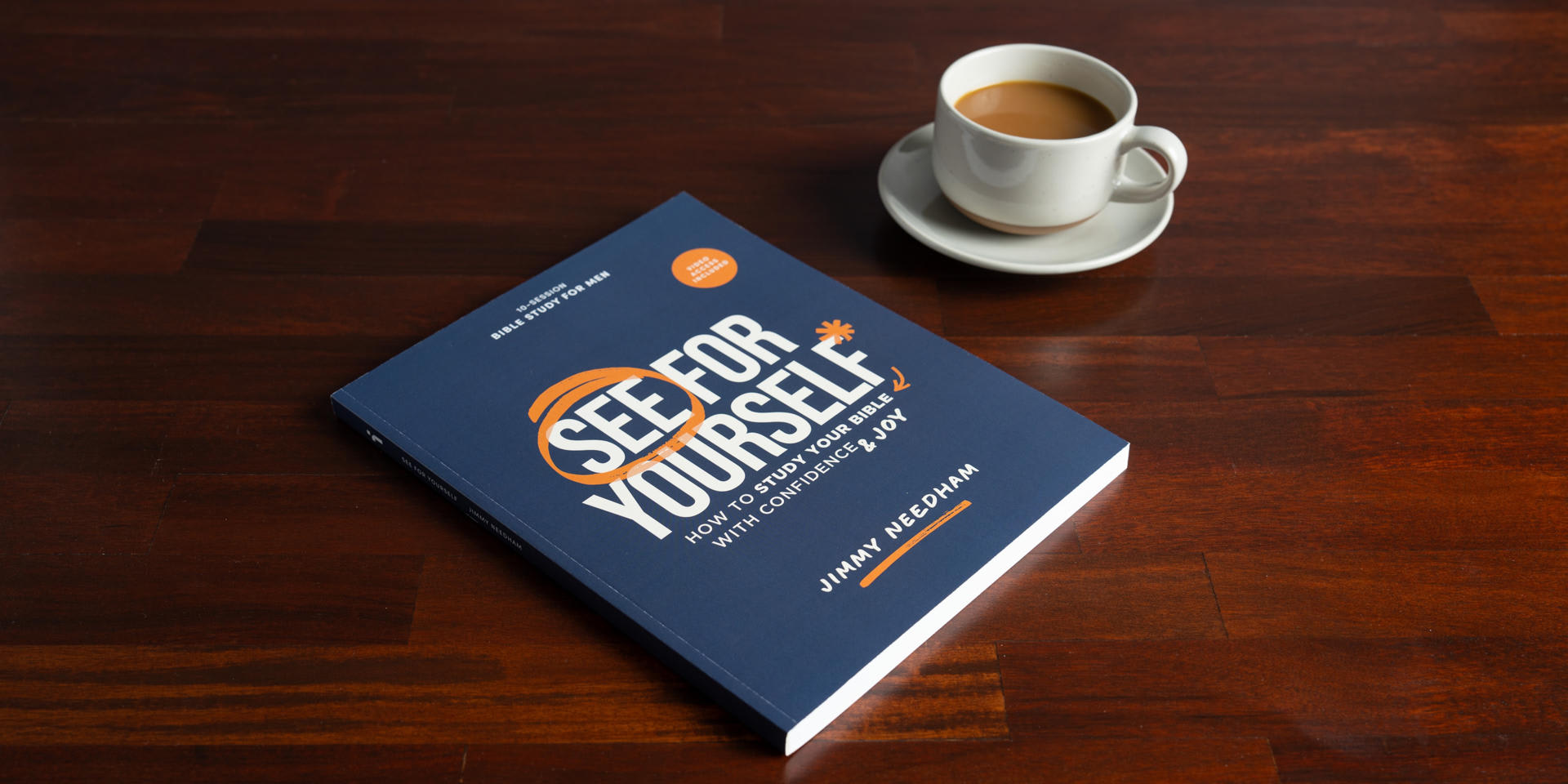
For a deeper look at the Bible’s structure and how to study it confidently, consider completing Jimmy Needham’s 10-session Bible study, See For Yourself: How to Study Your Bible with Confidence and Joy.
.