Fulfilling the role of a faithful prophet, Elijah’s first words were God’s words. And they weren’t easy words.
Now Elijah the Tishbite, from the Gilead settlers, said to Ahab, “As the Lord God of Israel lives, in whose presence I stand, there will be no dew or rain during these years except by my command!”
1 Kings 17:1 CSB
What was so bad about that? Well, if there were no rain, there would be no crops. If there were no crops, there would be no food. If there were no food, the people would starve. These were words of judgment. God was judging the people for their continual rebellion. But they were not only words of judgment, but they were also words of grace. The pigsty was not only a judgment on the prodigal son’s rebellion, but it was also a call to come home. The lack of rain was not only God’s judgment on his people, but a call for them to repent and come home.
This was not an easy message to hear, and it was definitely not an easy message to deliver. But Elijah, without any hesitation or reservation, without any fear or fanfare, came on the scene with nothing but a word from God.
Standing before the king with a word of judgment is an act of incredible courage (which we will discuss later). But his name reminds us that his courage flowed from something deeper. His name shows us the foundation from which his courage was built.
Elijah’s name tells us, first and foremost, that Elijah was a surrendered man. He was God’s man. He was not controlled by anyone else but God. He could not be bought because he had already been bought. He said what God said, no matter the cost, because he had already surrendered his mouth to the Lord. He went wherever he was called to go, no matter the cost, because he had already surrendered his feet to the Lord. This surrender, above everything else, would be the primary mark of his remarkable life.
Elijah comes out of nowhere, in the midst of a perverse, godless society that hated God and said, “I’m God’s man!”
"Elijah was the man for the day. He was ready and willing to do whatever God called him to do. But the reason he was the man for the day is that he was God’s man. And he was God’s man because he was a surrendered man. He was not trying to write his own story; he was trusting God to write his story."
J. Josh Smith
He was willing to stand alone. He was willing to suffer. He was willing to die. He was willing to say the hard things to the hardest people. He was willing to be confrontational and even willing to be obscure. And that resonates with us. We want to be that kind of man.
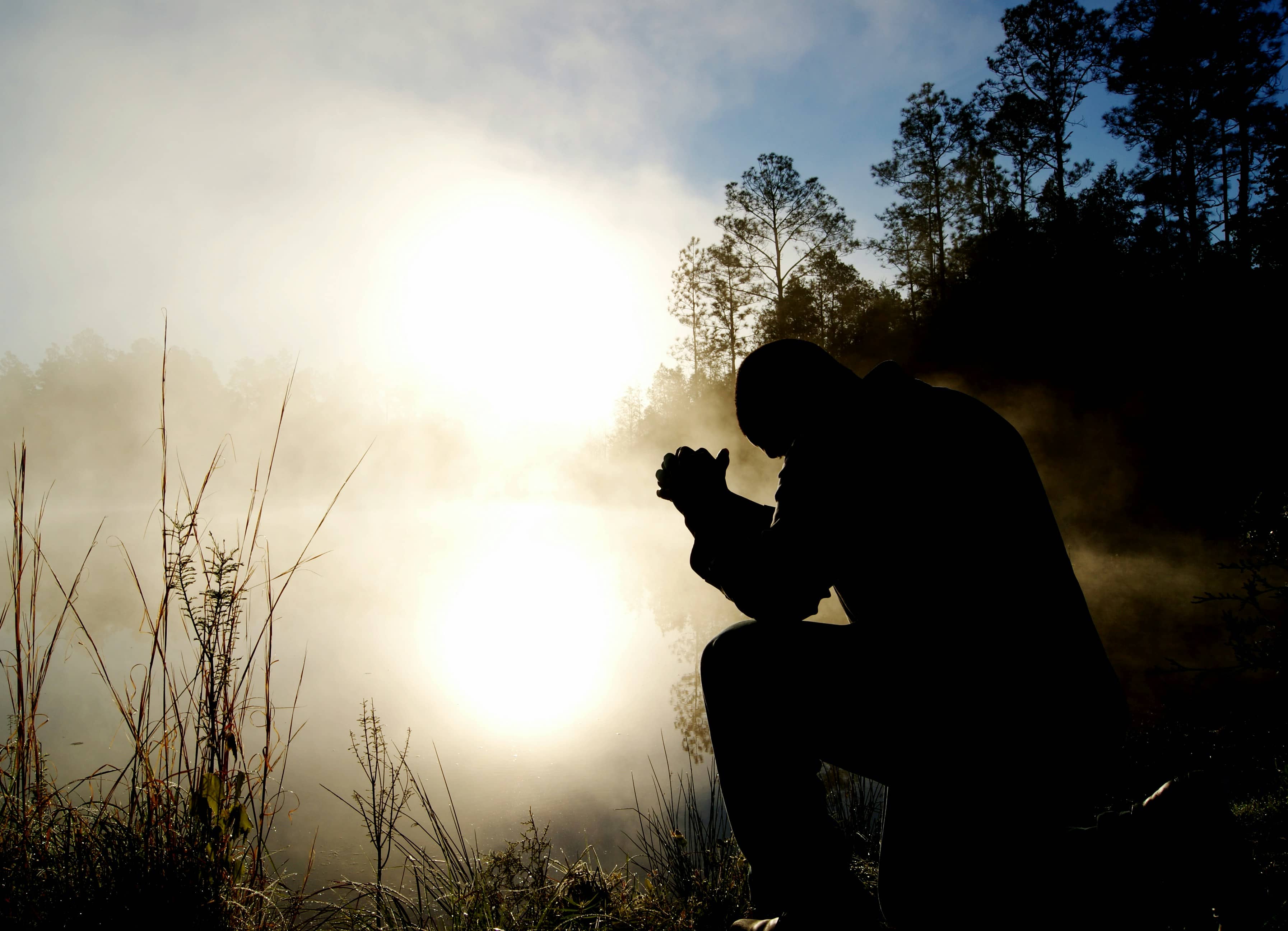
And it all begins with a surrendered life. Before Elijah stood in front of King Ahab and said, “I’m God’s man,” he already knelt before his King and said, “God, I’m your man.”
Being the man for the day is about being a man who is ready and willing to be used when, where, and how God desires to use you. This means, being the man for the day begins with trusting GOD to call the shots. It’s rooted in complete surrender to God. It is not about you being the man you want to be, but being the man God wants you to be. It’s not about fulfilling your plans, but God’s – no matter what those plans might be. Elijah was a surrendered man. And his surrender was essential to his usefulness. So is ours.