If you’re ready to start reading your Bible for the first time, and you're wondering what to do and where to start, here are 3 tips to help you.
1. Be consistent with it.
First and foremost, the most important thing is to be consistent with it. A steady drip every day goes a lot further than a lot of intensity just punctuated throughout the year. With whatever reading routine you create, make sure you stick to it.
2. Choose a book of the Bible and start there.
The Bible is made up of 66 books. So you should think about Bible study less like grabbing verses and more like going through books. Your best bet is to grab a book of the Bible and start there.
It doesn't have to be at the very beginning in Genesis, but anywhere that draws your interest. Reading a full book of the Bible is a much better way to engage with Scripture. Instead of reading a verse here and there without context, reading a book will help you grasp what God is trying to show us in His Word in its entirety.
Grab the Gospel of John or the Gospel of Mark, or dive in to Acts or start reading through the Psalms. Remember to read every day consistently.
3. Think of it as “His Thoughts, My Thoughts” while you’re reading.
When you're studying God's Word and having quiet times for the first time, I like to think of it in terms of “His thoughts, my thoughts, His thoughts, my thoughts.”
His thoughts are coming to me through the Word. But it's not just a one-sided interaction. I'm not just getting things from Him, I'm also communicating to Him in prayer and processing what I'm reading to myself.
A journal is often helpful for me. I read His thoughts from the Word, and then I download my thoughts and prayers onto another sheet of paper where I can start interacting with His Word.
In practice, this could look like you’re reading the Gospel of John and you have a question:
"What does it mean that the word became flesh and blood among us?"
I start writing my response in a colored pen while I read His Word and discover what He's saying.
"What does it mean that the word is made flesh? I don't understand that."
And I just record my thoughts as I study. Now, I have a chance to go back and forth between what I'm wrestling with and what He's saying in the Word. Over time, I get those questions answered as I study.
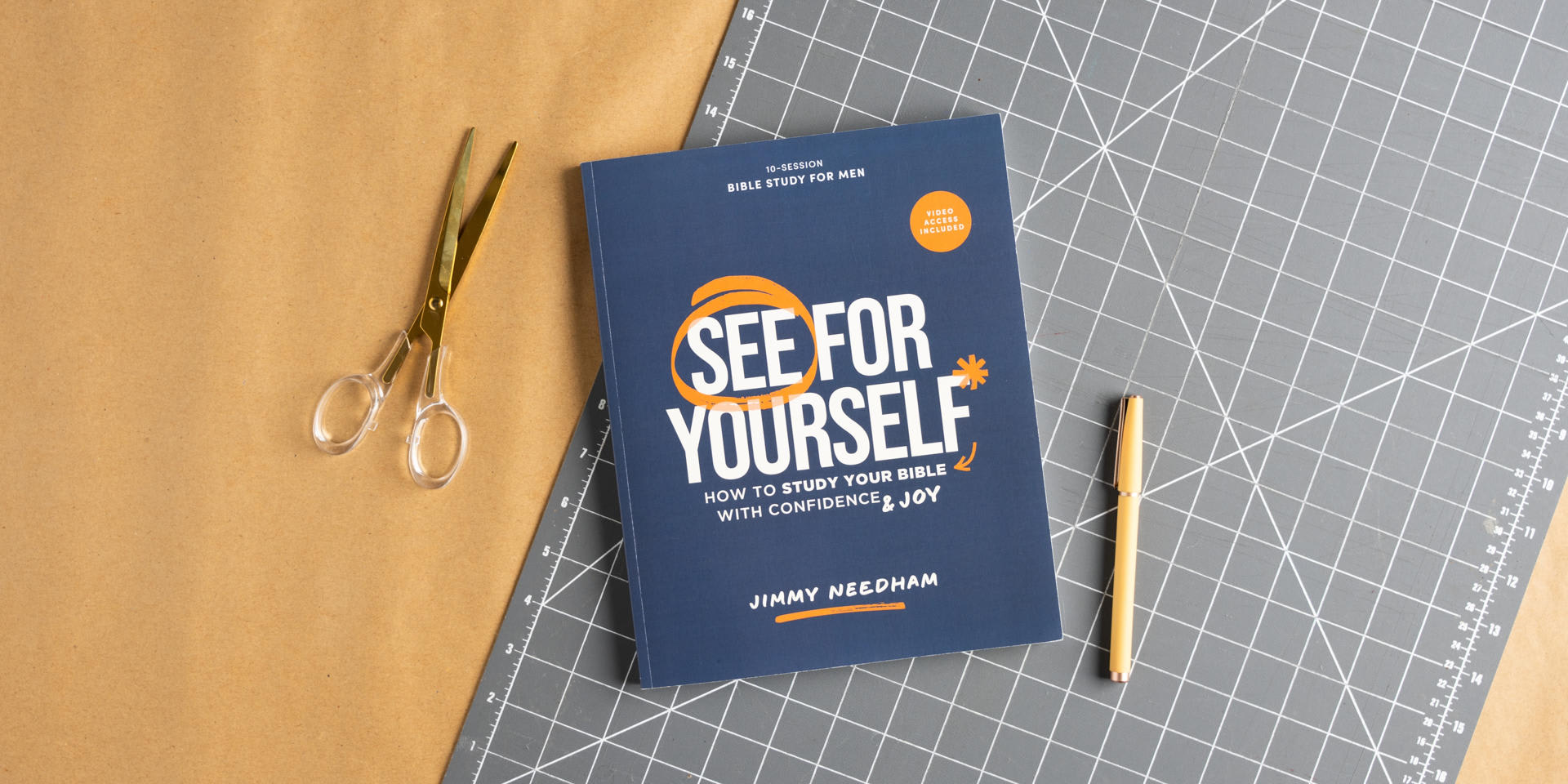
For more practical Bible study skills and tips like these, read Jimmy Needham’s 10-session Bible study, See For Yourself: How to Study Your Bible with Confidence and Joy.